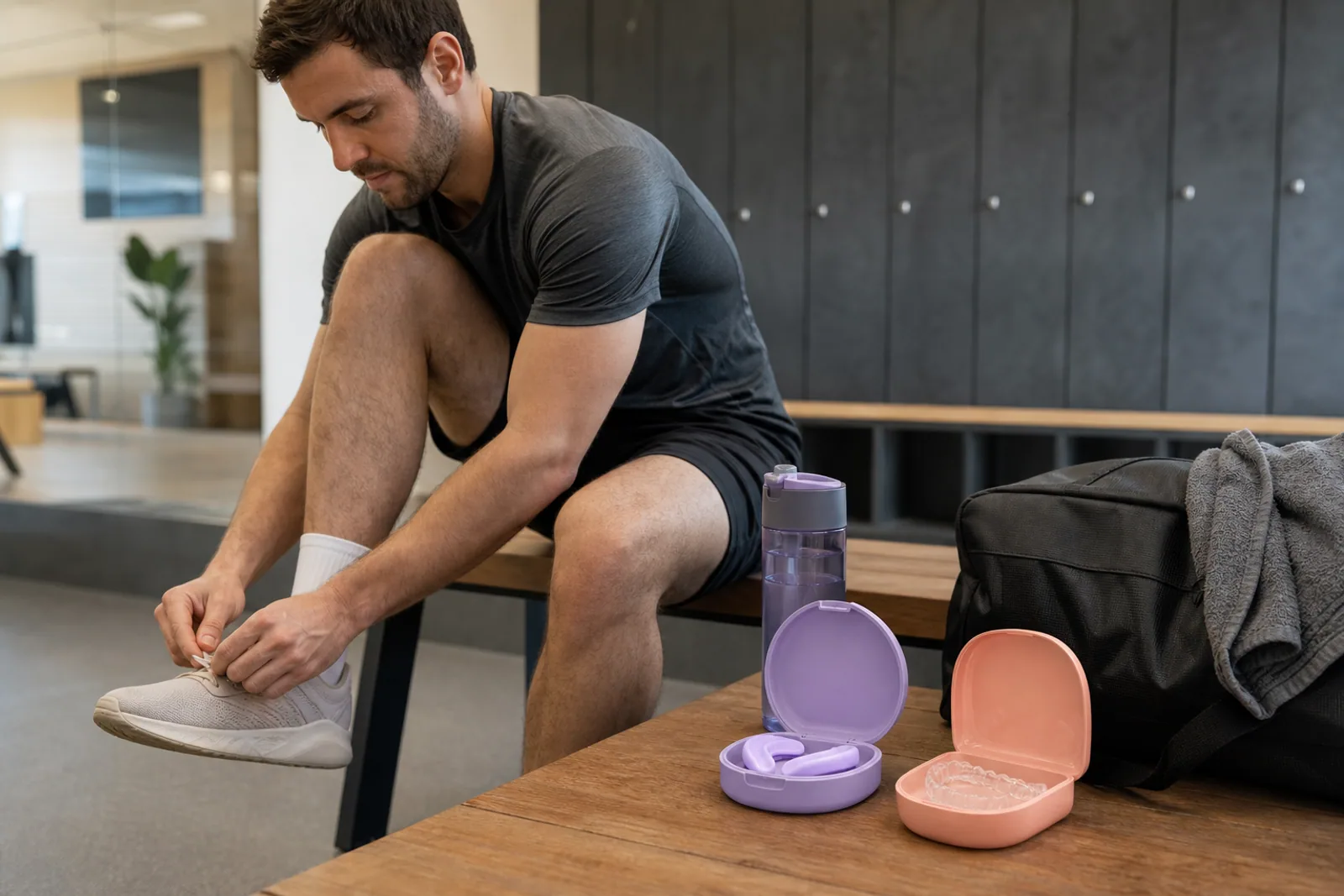
Why an aligner is not protective gear
A sports mouthguard uses resilient material and coverage designed to cushion blows. An aligner closely hugs the teeth and may crack or cut soft tissue during impact. Wearing a tray alone can create false confidence without meaningful impact protection.
Sports with player contact, fast-moving balls, sticks, boards, falls or wheeled equipment can all cause dental trauma. The need is based on injury risk, not whether the activity is formally labeled “contact.”
What to wear during practice and competition
Ask the treating dentist or orthodontist whether to remove trays and use an orthodontic-compatible mouthguard for your activity. Because teeth move, a tightly molded fixed-shape guard may stop fitting. Some designs provide space for planned movement and are replaced as treatment progresses.
Do not force a mouthguard over attachments or bite through discomfort. A poor fit can dislodge attachments, press on moving teeth or reduce protection.
Storage and daily wear time
Place removed aligners in a rigid ventilated case—never a helmet, towel, sock or pocket. After the session, rinse your mouth, inspect the trays and reinsert them promptly if they remain intact.
Frequent training can reduce wear time if removal is unmanaged. Build practice hours into the treatment conversation so the schedule is realistic. The provider may adjust staging or monitoring rather than letting repeated shortfalls accumulate.
Choosing a mouthguard
Custom-made guards generally offer clinician-controlled fit, while boil-and-bite or stock options vary substantially. During orthodontic movement, the best choice balances protection, retention, comfort and room for tooth movement. Your clinician should verify it over attachments and changing arches.
Label the guard and case, clean it according to instructions, let it dry, and inspect it for thinning, tears or distortion. Replace it when fit or material deteriorates.
What to do after a hit
Stop play and check for bleeding, chipped or displaced teeth, jaw pain, lip injury and damaged appliances. A cracked aligner or loose attachment also needs review. Keep any tooth fragment moist and contact a dentist promptly.
A knocked-out permanent tooth is time-sensitive. Handle it by the crown rather than the root and seek emergency dental care immediately. Follow local emergency guidance; do not delay because the mouthguard or aligner appears intact.
Coordinate sports and orthodontic care
Tell the provider your sport, position, season and equipment requirements before treatment. Bring the mouthguard to follow-up visits so fit can be checked as teeth move.
With the right guard and routine, most athletes can continue participating. The goal is not merely fitting two pieces of plastic—it is maintaining injury protection without undermining the prescribed tooth movement.
Practical planning checklist
At a mouthguard fitting, bring the current aligners and details of planned movement. The provider can examine attachment positions, erupting teeth and how much accommodation the guard needs. A guard that fits today may require replacement as the arches change.
Test the finished guard during non-contact practice. It should stay in place without constant clenching, allow breathing and communication, cover the intended teeth and have no sharp borders. A guard that falls out or makes breathing difficult is unlikely to be used consistently.
Create a sideline routine: remove trays into their case, insert the mouthguard with clean hands, and reverse the process after rinsing and inspecting both appliances. Coaches or athletic trainers should know where emergency contact information and the dental-trauma kit are kept.
After any meaningful impact, do not judge injury only by pain. Check tooth position, bite, mobility, gum bleeding and appliance damage. Some root or jaw injuries require examination and imaging even when the crown looks intact. Prompt assessment can affect whether a tooth is saved.
Build an emergency action card
Keep the dentist’s number, parent or emergency contact, allergies and basic dental-trauma instructions with the sports kit. Include a small clean container and, where locally recommended, an appropriate tooth-preservation product. Coaches should know that a knocked-out permanent tooth and a suspected jaw fracture require immediate action.
After the season begins, recheck mouthguard fit whenever attachments change or a new tray noticeably alters the arch. Bring the guard to dental appointments and replace it if it tears, loosens or cannot accommodate movement. The cost of periodic replacement is part of treatment planning for an athlete, just like replacement trays and retainers.
Do not decorate or modify a protective guard in ways that change thickness, retention or visibility. Team colors and identification can be planned with the manufacturer, but cutting vents, reheating material or adding rigid pieces may weaken protection. For athletes with braces on the opposing arch or a history of dental trauma, disclose that history during fitting. The guard should be selected for the actual sport and risk level, not only for price or how small it looks in the package.
Frequently asked questions
Can I play sports while wearing clear aligners?
Often yes, but remove them and use an appropriate sports mouthguard when your activity carries dental-injury risk, as directed by your clinician.
Can I wear a mouthguard over aligners?
Only with professional guidance. Many sports guards require the aligners to be removed and must allow room for planned movement.
How should I store trays during practice?
Use a labeled, rigid ventilated case kept in a secure place.
What if I am hit in the mouth?
Stop, assess for dental or jaw injury, and seek prompt dental care for displaced, broken or loose teeth, significant pain or damaged appliances.
Sources and review notes
This article was prepared by the Hello My Teeth Editorial Team from authoritative dental guidance and peer-reviewed research. It provides general education, not an individualized diagnosis or treatment plan.
- American Dental Association: Athletic Mouth Protectors
- American Association of Orthodontists: Clear Aligners
Ready for a professionally reviewed plan?
Complete the candidacy check and provide the requested records so a licensed professional can determine whether a Hello My Teeth plan fits your case.