The essential packing list
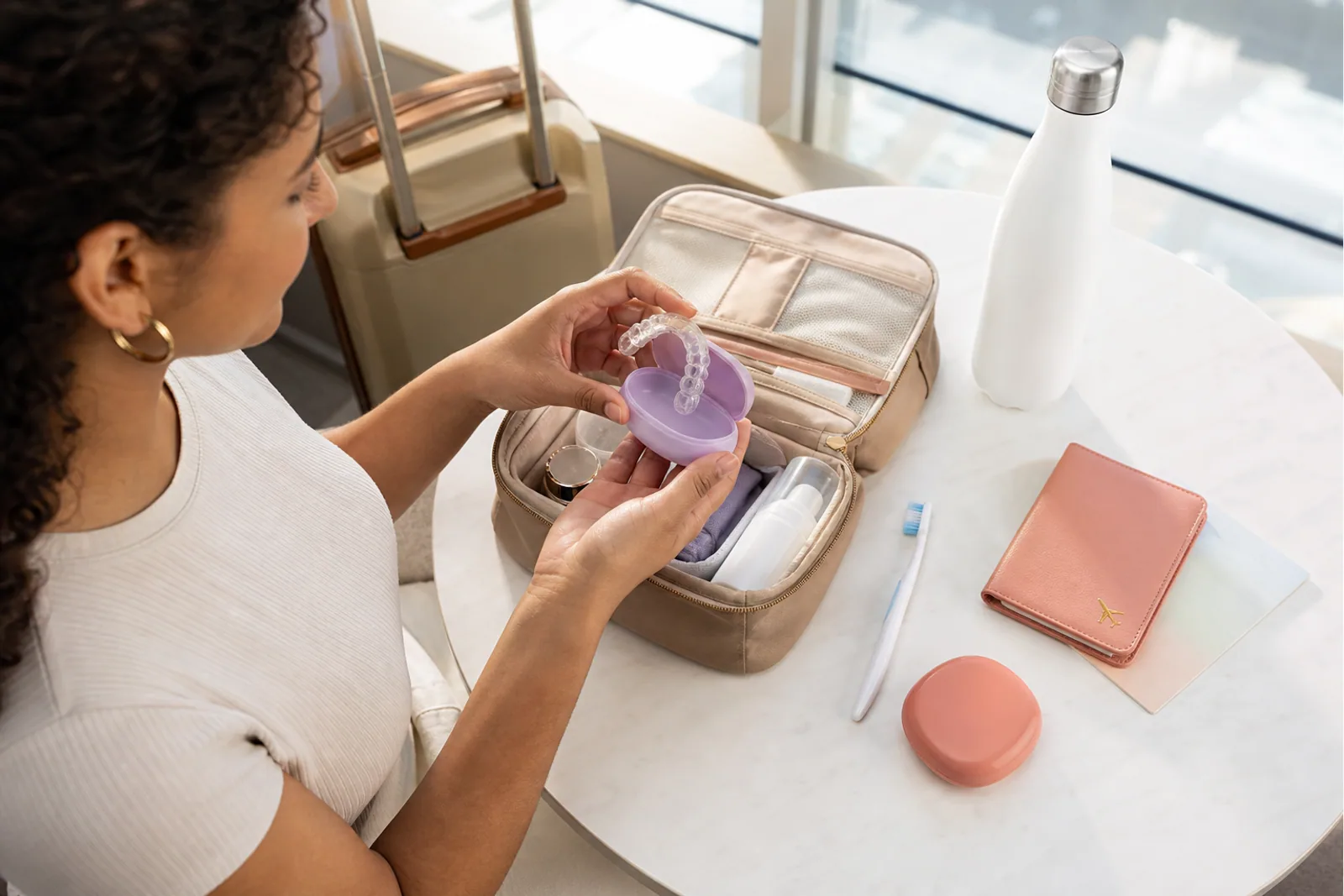
Pack your current trays, the previous set, and—if your provider approves—the next set in their labeled cases. Add a travel toothbrush, fluoride toothpaste, floss or interdental cleaners, a soft aligner-cleaning brush and any approved cleaning product. Keep your clinic’s contact details and treatment instructions accessible offline.
Put active and backup trays in carry-on luggage rather than checked baggage. Temperature extremes and lost luggage can leave you without a usable appliance.
Changing trays while away
Follow the date and wear schedule provided by your clinician. Crossing time zones does not usually require minute-by-minute recalculation; the priority is completing the prescribed days and daily hours. If the planned change occurs during a complicated travel day, ask whether to change before departure or after arrival.
Never advance through several sets to “catch up.” Teeth need the programmed sequence and biological response time; skipping ahead can cause pain, poor seating or unintended movement.
Cleaning safely away from home
Remove trays for meals and for drinks other than plain water, then brush or at least rinse before reinserting them when practical. Clean the trays with cool or lukewarm water. Hot water, a dishwasher or a car dashboard can warp thermoplastic.
When tap-water safety is uncertain, use bottled or otherwise safe water for rinsing and oral care. Keep wet trays ventilated in their case rather than sealing them in a tissue or loose pocket.
Planning your cleaning kit? Our clear aligner and retainer cleaner guide compares soaking and brush-on routines, including the equipment each requires.
If a tray is lost or damaged
Contact the treating practice with the tray number, how many days it was worn and where you are in the schedule. Depending on fit and timing, they may advise wearing the previous tray, moving forward, or arranging a replacement. There is no universal rule.
Do not continue wearing a cracked tray with a sharp edge or throw away the prior set. Keeping the previous aligner is one of the simplest travel safeguards.
Flights, security and long journeys
Aligners and their cases can go through normal airport screening. During long trips, set discreet reminders for meals and reinsertion. Bring water and plan oral cleaning stops so trays do not sit out for hours.
Cabin dryness may make the mouth feel dry. Sip water and avoid continuously drinking sweetened or acidic beverages with the trays in, which can hold liquid against the teeth.
Getting help away from home
For a minor fit question, send clear photos through the practice’s approved channel if remote review is offered. Severe tooth pain, facial swelling, trauma, a loose adult tooth or signs of infection need local in-person dental care rather than waiting for the trip to end.
Before a long absence, schedule a review and request enough supplies. Travel plans work best when the provider knows the dates and can build them into monitoring and delivery.
Practical planning checklist
Before departure, count every upper and lower tray and match the labels. Photograph the package numbers and store the clinic’s contact details, prescription and instructions securely. For international travel, ask whether a brief treatment letter is useful if supplies or professional care are needed.
Separate backup items so one lost bag does not take everything. Keep the active tray and case with you, while a duplicate brush, cleaning supplies and any approved seating aid can go in another secure bag. Never wrap aligners in a napkin, the most common path to accidental disposal.
Build meal and cleaning time into excursions. A compact kit with a ventilated case, water and basic hygiene supplies is more reliable than assuming a restroom will have what you need. If safe brushing is impossible, rinse temporarily and complete thorough care as soon as practical.
For a trip lasting several tray changes, arrange a review beforehand and confirm exactly when to advance. Ask what evidence the practice needs if fit becomes questionable and identify local urgent dental options. Remote advice helps with routine decisions but cannot treat trauma, infection or severe pain.
Create a written contingency table
Before leaving, write three instructions from the provider: what to do if the current tray is lost early, what to do if it is lost near the planned change date, and what to do if the next tray will not seat. Include the tray numbers and clinic response channel. This removes guesswork when you are tired, offline or in another time zone.
For longer travel, check whether replacement shipping is possible at the destination and whether customs or address limitations apply. Do not rely on it as the only backup. Keep the previous set, preserve routine dental insurance details and know where urgent care is available. A small amount of preparation protects both treatment continuity and access to real care when the problem is more than a missing piece of plastic.
Frequently asked questions
How many extra trays should I pack?
At minimum, carry the previous set and ask your provider whether to bring the next set based on trip length.
Can aligners go through airport security?
Yes. Keep them in their labeled cases in carry-on luggage.
What if I cannot brush after a meal?
Rinse your mouth and trays with safe water, reinsert them, and brush thoroughly as soon as practical.
Can heat damage aligners while traveling?
Yes. Hot water, direct sun and a hot vehicle can distort thermoplastic trays.
Sources and review notes
This article was prepared by the Hello My Teeth Editorial Team from authoritative dental guidance and peer-reviewed research. It provides general education, not an individualized diagnosis or treatment plan.
Ready for a professionally reviewed plan?
Complete the candidacy check and provide the requested records so a licensed professional can determine whether a Hello My Teeth plan fits your case.