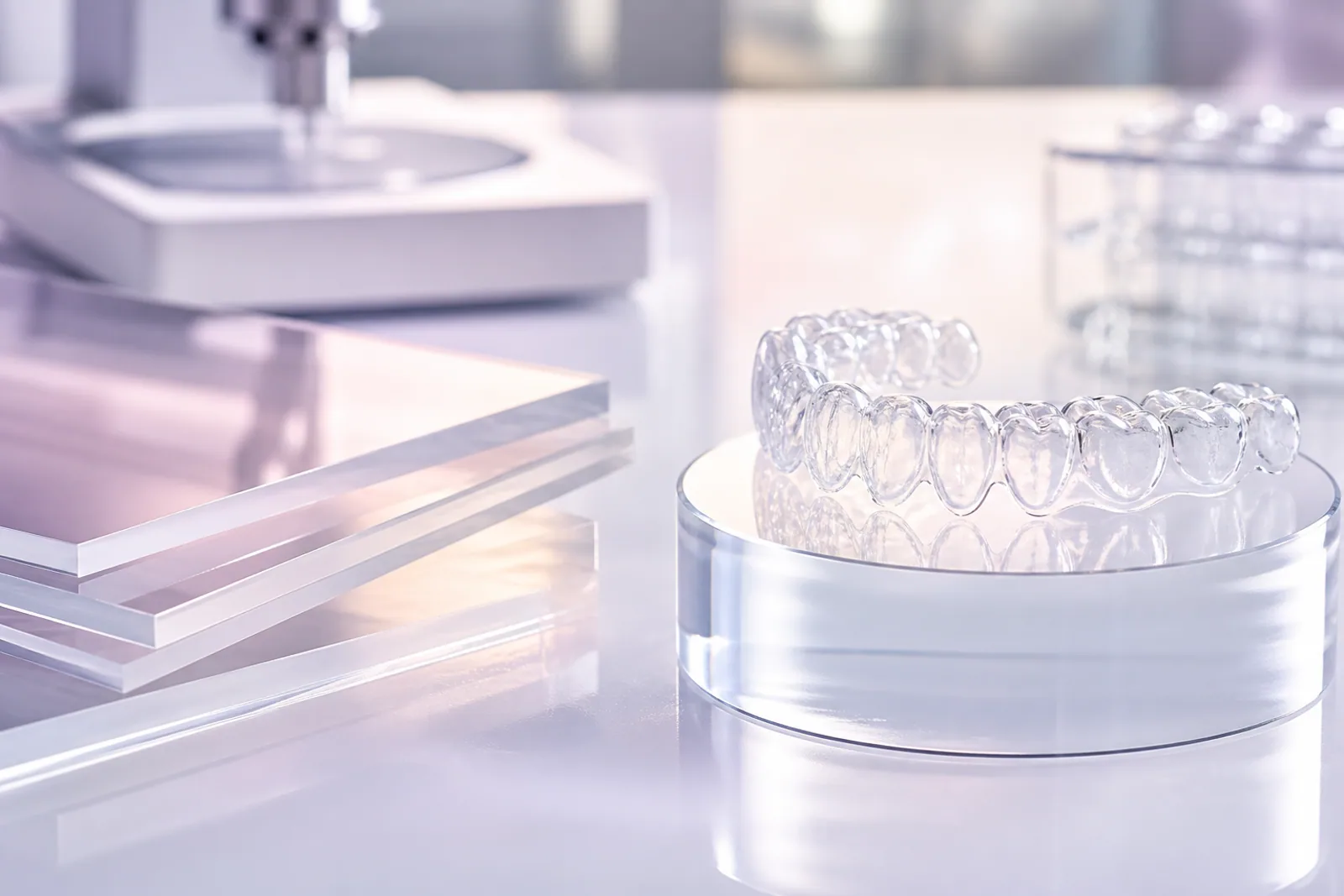
Common material designs
Some aligners use a single thermoplastic layer; others combine layers intended to balance elasticity and stiffness. Material thickness, forming, trimming and storage also influence how a tray behaves in the mouth. Manufacturer instructions and device-specific evidence matter more than assumptions based on appearance alone.
Ask the provider to identify the aligner system when material composition is important to you. They can obtain current manufacturer documentation rather than guessing from a generic label.
Biocompatibility and device oversight
In the United States, clear-aligner systems marketed as medical devices generally follow applicable FDA pathways and manufacturing controls. Clearance does not mean every product is identical or that treatment is risk-free; it indicates review for a stated intended use and regulatory framework.
Biocompatibility testing evaluates relevant biological risks for the intended contact. The safety of treatment also depends on correct diagnosis, design, wear, monitoring and oral health—not only the polymer.
BPA and chemical questions
Consumers often ask whether aligners contain bisphenol A (BPA), latex or other allergens. Formulations and accessories vary, so use the written statement for the exact product and lot where available. Broad “chemical-free” claims are scientifically meaningless because all materials are made of chemicals.
If you have a known plastic, resin, latex or dental-material allergy, give the provider details before records or attachments are placed. They may contact the manufacturer or select an alternative.
Possible irritation and allergic reactions
Most early discomfort comes from pressure or mechanical rubbing rather than allergy. A rough edge may cause a localized sore, while a contact reaction could involve persistent burning, swelling, rash or widespread irritation. Symptoms need assessment because infections and other oral conditions can look similar.
Remove an appliance and seek urgent medical help for breathing difficulty, throat or facial swelling, or signs of a severe allergic reaction. For a minor persistent sore, contact the dental practice rather than repeatedly reshaping the tray at home.
Heat, cleaning and material integrity
Thermoplastics can deform when exposed to hot water, appliances, direct sun or a hot vehicle. Distortion may be subtle but can change fit and force. Store trays in their ventilated case and use cool or lukewarm water.
Use only cleaning methods compatible with the specific product. Bleach, harsh solvents, colored mouthwash and abrasive toothpaste may damage or stain trays. Never boil an aligner to make it fit.
Questions worth asking a provider
Ask who manufactured the device, whether it is intended for orthodontic tooth movement, what professional monitors treatment, and how adverse reactions or damaged trays are handled. A traceable system should provide instructions and a route for reporting product problems.
Material safety is one part of a safe service. Appropriate records, periodontal evaluation, realistic movement limits and access to follow-up care remain essential.
Practical planning checklist
Keep the aligners in original labeled packaging until each stage is used. Labels help identify the system, arch and sequence if a defect or reaction is reported. Do not mix unmarked trays from different sets or use a third-party reshaping service.
If symptoms begin, document timing, location, cleaning products, new attachments or elastics, and whether symptoms improve when the tray is removed under professional direction. Mechanical irritation, cleaner residue and material sensitivity require different solutions, so the details matter.
Ask how the product is manufactured and traced, where current instructions are available, and how adverse events are reported. Legitimate clinical care should provide a responsible manufacturer and a professional contact rather than a generic “medical-grade” marketing phrase.
Inspect every new tray for cracks, sharp flash, contamination or obvious mismatch before insertion. Do not boil, heat, chemically sterilize or sand it. A clinician can determine whether a small edge needs professional smoothing or the appliance should be replaced.
How to evaluate a product claim
Look for specific, verifiable information: the manufacturer, intended use, instructions, professional prescriber and a traceable way to report defects. Phrases such as “premium,” “non-toxic” or “medical grade” do not by themselves identify a polymer, prove suitability for orthodontics or explain how the device was tested. Ask for documentation for the exact system rather than relying on a claim that applies to all clear plastic.
Material discussions should also include accessories. Attachment resins, elastic components, cleaning products and impression materials may contact oral tissues and have separate ingredient or allergy considerations. Give the clinician a complete reaction history, including latex, acrylic, adhesives and flavorings. If a new symptom appears, preserve the labeled tray and product packaging so the team and manufacturer can investigate the correct item.
Disposal and reuse should follow the provider’s instructions. Keep recent trays when they may be needed as a backup, but do not share appliances, sell unused sets or try to remold them for another person. Each tray is made for one prescription and one stage of a specific dentition. If a manufacturer issues updated instructions or a recall, the labeled packaging and treating practice provide the safest route for identifying affected devices and arranging the next step.
Frequently asked questions
Are all clear aligners made from the same plastic?
No. Manufacturers use different single- or multilayer thermoplastic formulations and production methods.
Do clear aligners contain BPA?
It depends on the specific product. Request the current material statement from the manufacturer or treating provider.
Can I be allergic to clear aligners?
Reactions appear uncommon, but material or accessory sensitivities are possible. Persistent burning, swelling or rash needs professional assessment.
Why can’t I wash aligners in hot water?
Heat can warp thermoplastic, changing the tray’s fit and intended force.
Sources and review notes
This article was prepared by the Hello My Teeth Editorial Team from authoritative dental guidance and peer-reviewed research. It provides general education, not an individualized diagnosis or treatment plan.
- FDA 510(k): ClearCorrect System
- PubMed: Intraoral Aging of Clear Aligner Materials—Systematic Review
- American Dental Association: Direct-to-Consumer Dental Services
Ready for a professionally reviewed plan?
Complete the candidacy check and provide the requested records so a licensed professional can determine whether a Hello My Teeth plan fits your case.