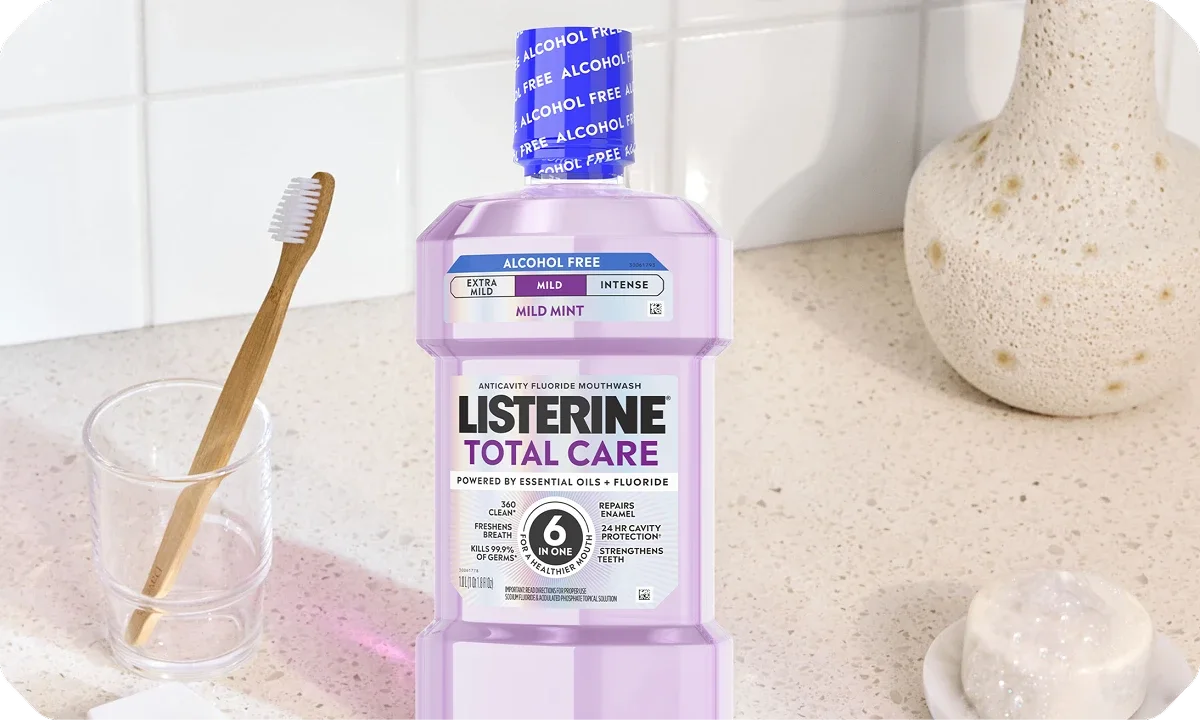
A rinse can be selected for fresh breath, a labeled cavity-prevention purpose or another care need. Those are different decisions. Start by asking what the bottle is meant to add to your routine, then compare ingredients, directions and practical cost.
Mouthwash: compare formats and priorities
Option or priority
Where to start
What to check
Fresh-breath or cosmetic rinse
You want a freshening product.
Read whether the label makes any therapeutic claim; do not assume it does.
Fluoride rinse
A fluoride rinse is part of your advised care.
Check the active ingredient, dose, frequency and age instructions.
Antiseptic or gum-care positioning
You are comparing a specific gum-care purpose.
Use the precise label and ask about ongoing symptoms rather than relying on flavor strength.
Dry-mouth positioning
You want a product intended for dry-mouth care.
Distinguish symptom-focused products from other rinses, and discuss persistent dryness.
Step 1
Choose the formula before the flavor
Listerine, TheraBreath and ACT each offer several named products. Compare the stated purpose of two exact bottles first. Alcohol-free is a useful filter for a preference, but it does not explain every active ingredient or benefit.
Step 2
Calculate the amount used
Read the dose and frequency before estimating how long a bottle will last. A cheaper bottle may contain fewer labeled uses. Do not reduce or increase the dose to make a cost comparison look better.
Step 3
Fit it into the rest of your care
Bring the actual product label to your dental professional if you are unsure how to use it alongside other products. Keep adult and child instructions separate and use the supplied measuring method where directed.
Care guidance in context
The ADA distinguishes cosmetic and therapeutic mouthwashes. A rinse is not a replacement for brushing and cleaning between teeth. Follow age guidance; the ADA says mouthwash is generally not recommended for children younger than six unless directed by a dentist.
Does a stronger burning sensation mean a better rinse?
It is not a dependable way to compare purpose or results. Read the active ingredients and directions, and choose a product you can use as advised.
Does alcohol-free mean fluoride-free?
Those describe different ingredients. An alcohol-free claim does not tell you whether fluoride is present. Check the active ingredient panel.
Should everyone add mouthwash?
Not necessarily. Identify the reason for using it and ask how it fits your care. Extra products do not automatically improve a routine.
Before choosing a product.
Compare the exact model or formulation, current instructions, compatible supplies and the complete cost of using it. A brand may sell several products with different purposes. Our overviews explain where to start; they do not establish individual suitability.