Why missing teeth change the treatment plan
Every tooth helps share chewing forces and maintain its neighbors’ positions. When a tooth is absent, nearby teeth may tip or drift and the opposing tooth may move into the open space. A clinician therefore plans not only how the visible teeth should look, but also how the roots, bite contacts and final restoration will work together.
Your records may include photographs, digital scans and X-rays. If an implant is planned, the dentist or orthodontist may coordinate with a restorative dentist or oral surgeon before movement begins. This shared plan defines the exact space and root position needed for the replacement tooth.
Should the space be closed or preserved?
Some spaces can be closed orthodontically, while others should be preserved or recreated for an implant, bridge or removable replacement. The decision depends on facial balance, bite, tooth size, jaw relationship and the health of adjacent teeth—not simply the width of the gap.
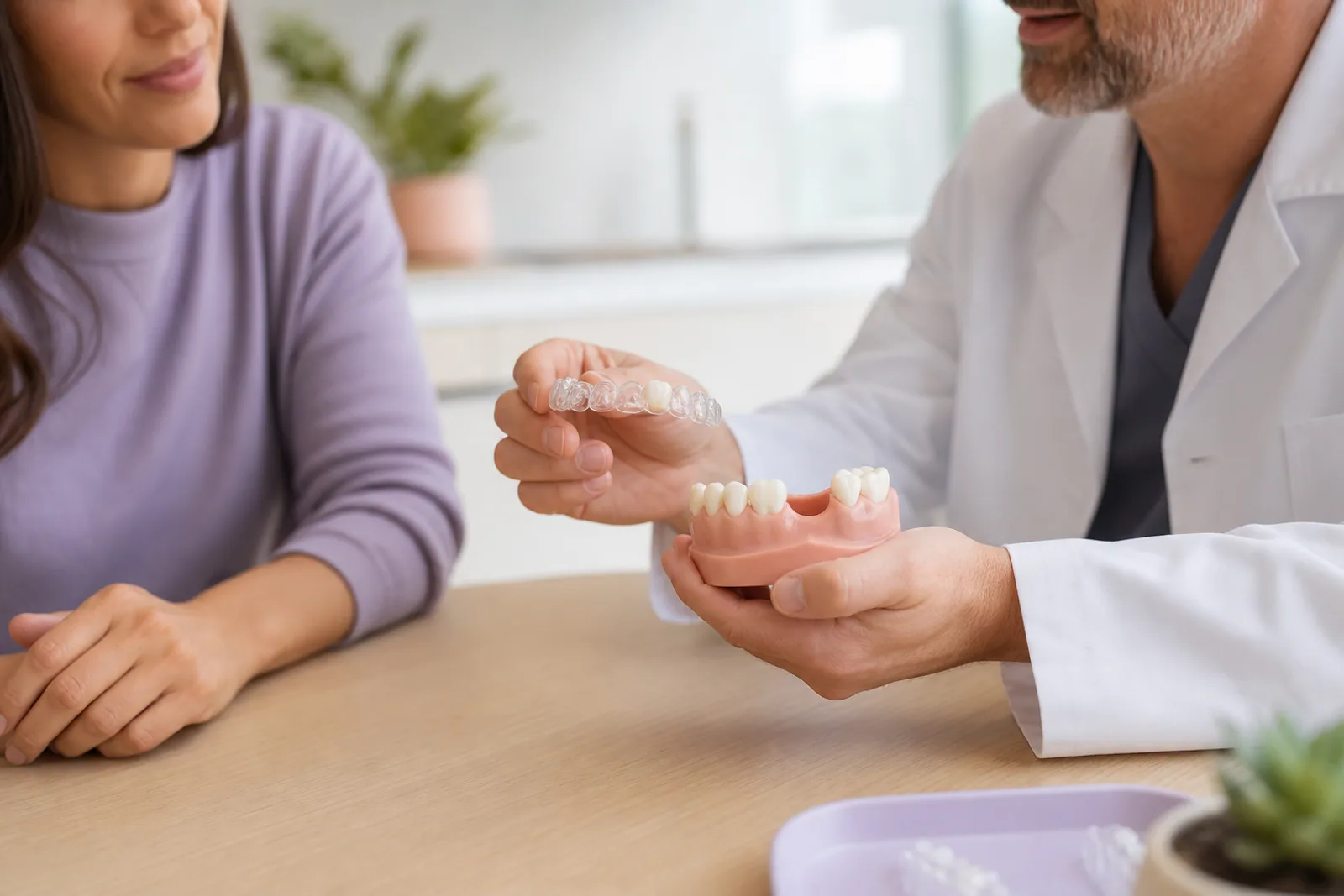
Aligners can include a tooth-colored “pontic” inside the tray to disguise a visible space during treatment. A pontic is cosmetic; it does not replace the function of a permanent restoration. Its shape may need adjustment as the space changes.
What if you already have a dental implant?
A dental implant is anchored to bone and does not move like a natural tooth. Aligners may move natural teeth around a stable implant, but the implant’s fixed position becomes an important design constraint. Existing crowns and bridges can also change how attachments fit or how forces are delivered.
Tell your provider about every implant, bridge, crown and previous bone graft. Trying to force a tray around a restoration or altering it at home can damage the aligner and disrupt planned movement.
What treatment may involve
Your trays may use attachments, staged space opening or closure, and careful root movement. If a tooth is being prepared for an implant, the visible gap can look correct before the roots are ideally separated; radiographs help the clinician assess what cannot be seen in a smile photograph.
Wear each tray for the prescribed time and attend monitoring visits. Report a tray that rocks near the space, a loose crown, gum swelling, or new pain. These signs need professional review rather than extra wear time or improvised filing.
Protecting gums and bone
Plaque can collect around tipped teeth, restorations and open spaces. Brush twice daily with fluoride toothpaste, clean between teeth, and clean the aligners before reinserting them. Active gum disease or untreated decay should usually be addressed before elective tooth movement.
If a tooth was lost recently, timing matters because bone and gum contours change during healing. Your dental team can explain whether orthodontic movement should occur before, during or after restorative treatment.
When a comprehensive evaluation is essential
Complex missing-tooth cases benefit from coordinated, in-person diagnosis. Seek prompt care for swelling, drainage, fever, a loose implant, persistent bleeding or severe pain. These are not normal aligner effects.
Clear aligners are one tool in a larger restorative plan. A sound result leaves adequate space, healthy tissues, stable bite contacts and a realistic path to replacing—or intentionally closing—the missing-tooth area.
Practical planning checklist
Bring a timeline of when and why each tooth was lost, along with information about existing dentures, bridges, implants and bone grafts. The team needs to know whether space has changed, whether neighboring teeth are stable and whether any replacement is temporary or definitive.
Ask the restorative and orthodontic clinicians to define the target in millimeters and root position, not just “make room for an implant.” The implant dentist may need a particular crown width and bone corridor, while the orthodontic plan must preserve healthy contacts and a stable bite.
During treatment, watch temporary pontics and attachments near the gap. A cosmetic tooth inside the tray may need reshaping as space opens or closes. If it presses on the gum, falls out or prevents the tray from seating, contact the practice rather than gluing it at home.
Before active movement ends, confirm the sequence for implant placement or other restoration, the holding appliance during healing and the final retainer after the new tooth is fitted. Long gaps between these steps can allow carefully created space to change.
Define the handoff between specialties
Ask each clinician to name the decision they own. The orthodontic provider manages planned tooth and root position; the restorative dentist defines the replacement shape and bite; an oral surgeon or periodontist may evaluate bone and implant timing. Request that the shared target be recorded so a change by one office is communicated to the others.
Plan for the interval between aligners and the final tooth. A passive tray, pontic or temporary restoration may be needed while an implant integrates or a bridge is made. Confirm how often the space will be measured and what to do if the holding appliance cracks. The finish is not complete when the teeth look aligned—it is complete when the replacement, bite and retention system work together.
Frequently asked questions
Can aligners close every missing-tooth gap?
No. Some gaps may be closed, while others need to be maintained for an implant or bridge. The choice requires bite, root and restorative assessment.
Can I wear aligners over a dental implant?
Often yes, because the tray can be designed around the implant, but the implant itself will not move.
Will the gap be visible during treatment?
A clinician may place a tooth-colored pontic in the tray for appearance, particularly in the front of the mouth.
Do I need an implant before or after aligners?
Either sequence may be appropriate. Because implants do not move, orthodontic space and root positioning are often finalized first.
Sources and review notes
This article was prepared by the Hello My Teeth Editorial Team from authoritative dental guidance and peer-reviewed research. It provides general education, not an individualized diagnosis or treatment plan.
- American Association of Orthodontists: Clear Aligners
- American Dental Association: Direct-to-Consumer Dental Services
Ready for a professionally reviewed plan?
Complete the candidacy check and provide the requested records so a licensed professional can determine whether a Hello My Teeth plan fits your case.