What the clinician needs to evaluate
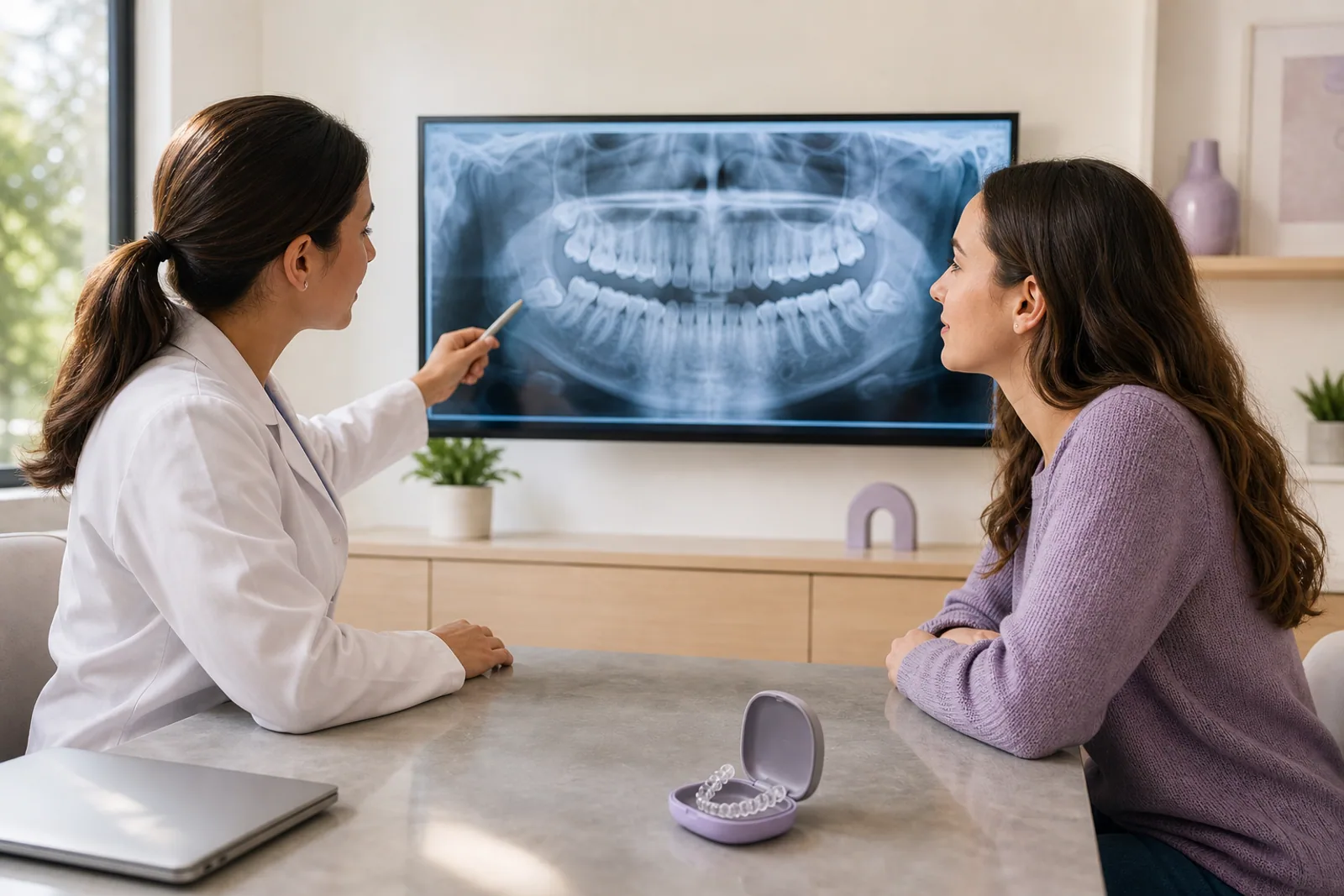
Imaging may be needed to see whether third molars are erupted, partially erupted, impacted, angled, or close to important structures. Photographs and impressions show surfaces but not the full position below gums.
Tell the care team about swelling, repeated infection, pain behind the last molar, difficulty cleaning, or a prior recommendation for extraction. These are health questions first and scheduling questions second.
Why extraction is not automatic
Asymptomatic wisdom teeth in a stable position may not interfere with a selected plan. Removal should not be presented as a universal prerequisite simply because third molars exist.
Conversely, a partially erupted tooth with repeated inflammation or decay may need attention even when front teeth are the cosmetic concern. The dentist or oral surgeon evaluates the indication; the aligner clinician coordinates timing.
Can wisdom teeth push front teeth crooked?
Crowding and relapse are multifactorial. Jaw growth, tooth size, gum and bone changes, and retention all matter. It is too simple to blame every lower-front change on wisdom teeth.
Removing third molars is not a substitute for retainers. Follow the prescribed retention plan whether wisdom teeth are present or absent.
If extraction happens before aligners
Allow tissues to heal as directed before final records or tray wear. Swelling and changes near back molars can affect fit. If a scan was taken before extraction, ask whether it still represents the mouth accurately enough.
Do not place an aligner over a fresh surgical area unless both treating professionals approve it. Oral-surgery instructions may temporarily conflict with normal wear.
If wisdom-tooth problems start during treatment
Contact a dentist for pain, swelling, bad taste, fever, or difficulty opening the mouth. Do not assume pressure is from a new tray. Bring aligners so the dentist understands the appliance and can advise on wear.
Extraction or other dental work can change fit. Keep previous trays and coordinate before resuming or advancing.
Questions before ordering trays
Are all wisdom teeth visible on recent imaging? Are any diseased or likely to interfere with planned distal movement? Is removal recommended for health reasons? If planned, should final records be collected before or after healing?
A remote candidacy check cannot answer all of these. Use it to begin, then provide the examination and imaging requested by the licensed professional.
Practical planning checklist
Evaluation starts by determining whether each wisdom tooth is erupted, partially erupted, impacted or absent, and whether it has decay, gum inflammation, cystic change or effects on the neighboring molar. These findings—not a blanket age rule—guide extraction and orthodontic timing.
If removal is recommended, ask how long to pause tray wear, when to resume and whether the current tray should be modified. Swelling and limited opening can make insertion difficult, while a tray edge near the surgical site may irritate tissue. Follow the surgeon’s instructions rather than forcing wear to protect a calendar.
Keep the aligner and surgical areas clean without disturbing the clot. Avoid hot-water tray cleaning, smoking, forceful rinsing and unapproved products. Pain that intensifies after initial improvement, fever, foul taste, uncontrolled bleeding or increasing swelling warrants prompt contact with the surgical team.
Wisdom-tooth extraction does not automatically create useful space for front-tooth alignment, and keeping wisdom teeth does not prove they will push all other teeth crooked. Crowding and relapse have multiple causes. The orthodontic plan and long-term retainers remain important regardless of whether third molars are present.
Questions for the orthodontist and surgeon
Ask whether the wisdom tooth is healthy and maintainable, whether it damages the second molar, and whether its position affects access or planned movement. If extraction is proposed, request the clinical reason and the intended sequence—not just a statement that all third molars must be removed for aligners.
If surgery occurs during treatment, coordinate the active tray, medication and follow-up instructions between offices. Confirm who should be called for bleeding, suspected dry socket, tray irritation or swelling. Once healing permits, the orthodontic provider should recheck seating before you advance. This shared review avoids treating a surgical complication as a routine fit problem or losing progress through an unnecessary prolonged pause.
Retention planning remains necessary after the surgical and orthodontic phases. Teeth can shift for many reasons throughout life, and removal of third molars does not replace a retainer. Ask when the final scan will occur, whether healing could change the back edge of the appliance, and how quickly a damaged retainer can be replaced. Continue routine examinations of the second molars next to the extraction sites, because their distal surfaces can be difficult to see and clean. A complete plan follows the area after symptoms settle instead of assuming extraction closes the case.
Frequently asked questions
Can I start with impacted wisdom teeth?
Possibly, but position, symptoms, health, and planned movements must be reviewed.
Will removal make room for front teeth?
Not automatically; space and movement planning depend on the whole arch and bite.
How long after extraction can I wear aligners?
Follow the oral surgeon and aligner clinician because timing depends on healing and tray coverage.
Do wisdom teeth cause relapse?
Relapse has multiple causes; retainer wear remains important regardless of third-molar status.
Sources and review notes
This article was prepared by the Hello My Teeth Editorial Team from authoritative dental guidance and peer-reviewed research. It provides general education, not an individualized diagnosis or treatment plan.
- American Association of Orthodontists: Clear Aligners
- American Dental Association: Home Oral Care
- American Dental Association: Direct-to-Consumer Dental Services
- PubMed: Root Resorption With Clear Aligners—Systematic Review
Ready for a professionally reviewed plan?
Complete the candidacy check and provide the requested records so a licensed professional can determine whether a Hello My Teeth plan fits your case.