What elastics are meant to change
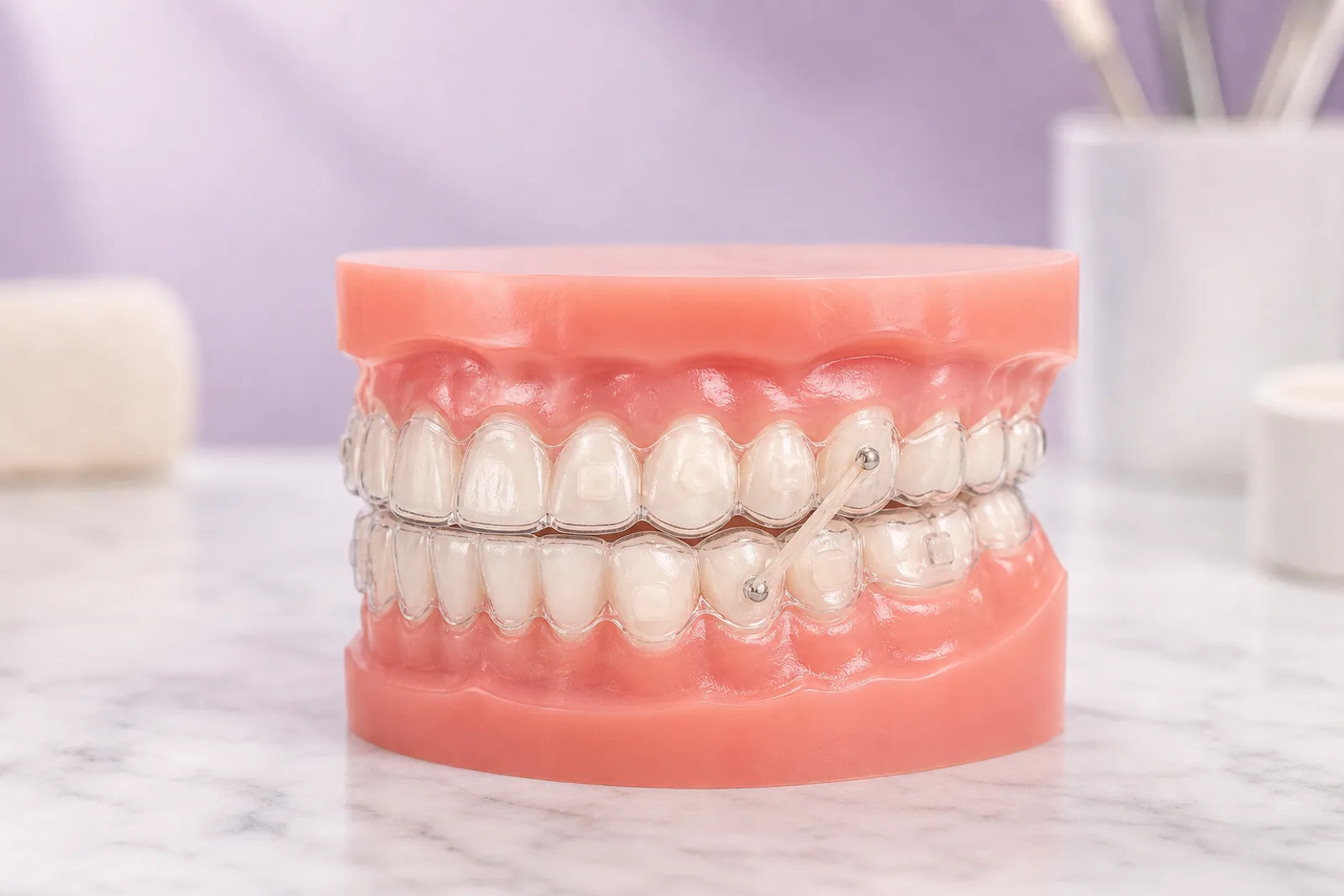
A tray mainly controls the teeth it covers. An elastic connects selected points, often between the upper and lower arches, so force acts across the bite. Clinicians may use them for selected overjet, underbite, crossbite, midline, or settling goals.
The same-looking rubber band can create a different effect when attached in another direction. Online diagrams and another patient’s setup cannot safely tell you where yours belongs.
Buttons, hooks, and aligner cutouts
Elastics may connect to small bonded buttons on teeth or precision cuts formed in the tray. Some plans use both. A button is an anchor; a tooth-colored attachment generally helps the tray grip or control movement. Learn the terms in your instructions so you can report a broken part accurately.
Before starting, confirm upper and lower anchor points, elastic size, wear schedule, and whether trays remain in place while elastics are attached.
Why exact wear matters
Elastics lose force with use and should be changed on the schedule provided. Wearing them for fewer hours can reduce the intended effect. Doubling them, choosing a stronger size, or changing direction can overload tissues or move teeth unintentionally.
Keep spare elastics in a clean container and record replacements. If the schedule is difficult because of irritation, work, sleep, or dexterity, tell the care team early rather than improvising.
Normal pressure versus a problem
Mild pressure or muscle awareness can occur when elastics are introduced. Stronger pain does not mean faster progress. Persistent jaw pain, significant headache, soft-tissue cuts, swelling, a loose tooth, or a rapidly changing bite should be reported.
If an anchor irritates the cheek, ask about approved relief. Do not bend, grind, or remove a bonded button yourself.
If an elastic or anchor breaks
A snapped elastic can usually be replaced with the prescribed type. If a button comes off or a tray hook tears, contact the care team. Note the side, tooth, tray number, and whether the tray still seats.
The provider may pause elastic wear on one or both sides. Do not continue a one-sided pattern unless instructed, because asymmetric force may alter the bite or midline.
Questions to ask before starting elastics
Ask what bite objective the elastics support, how progress will be measured, the expected duration, what changes should trigger a check-in, and what to do during meals, sports, and travel. Confirm whether replacements are included.
Elastics can expand what an aligner plan attempts, but they do not make every jaw discrepancy suitable for remote care. Review crossbite limits and overbite limits.
Practical planning checklist
Before starting elastics, practice the hook pattern in front of the clinician and take a labeled photo or diagram home. Upper-to-lower direction matters: reversing the pattern can apply the opposite force. Know the elastic size, strength, replacement frequency and whether it should be worn during meals.
Hooks can be cut into the tray or attached to bonded buttons. Inspect both when inserting a new set. A torn cutout, loose button or elastic that repeatedly snaps changes force delivery and should be reported. Do not double the elastics to compensate for a missed day unless specifically directed.
Consistent use is more important than occasional heavy force. Carry fresh elastics and a small mirror, change them as instructed and record missed time honestly. If one side is prescribed, do not add the other side for symmetry. The asymmetry may be intentional for a midline or bite correction.
Jaw soreness, irritated cheeks and temporary bite changes can occur, but severe pain, swelling, a loose tooth or inability to close comfortably needs assessment. At review visits, the clinician should confirm both tooth movement and bite response; a tray can look seated while the inter-arch correction still needs adjustment.
Make elastic wear auditable
Use a simple daily log for the first two weeks: hours worn, replacement times, breakages, soreness and any day the hook pattern was uncertain. This is not about blame. It gives the clinician useful evidence when the bite is moving faster on one side, the trays stop seating or the expected correction is not appearing.
At each review, demonstrate the pattern rather than saying you remember it. Confirm whether the elastic strength or direction has changed with the new stage and discard old packets that could be confused. Photograph a loose button before it falls away if possible. If the jaw locks, swelling develops or pain is sharp and increasing, stop treating it as routine elastic pressure and contact the dental team.
Replacement supplies should come from the treating practice or the exact product they specify. Elastics that look alike can deliver different force, and age, storage and stretching affect performance. Keep packets dry, away from heat and out of reach of children or pets. If you run out, contact the practice rather than substituting orthodontic bands bought online. A few days with the wrong force can be less useful—and potentially more disruptive—than following a clinician-approved temporary plan.
Frequently asked questions
Can I buy replacement elastics online?
Use only the type and size supplied or approved by your treating professional.
Should I sleep with elastics?
Follow the prescribed schedule; some plans include overnight wear and others differ.
Can I eat with elastics on?
Most people remove trays and elastics for meals, but follow your own instructions.
What if I forget which hook to use?
Stop and contact the care team for a diagram or confirmation rather than guessing.
Sources and review notes
This article was prepared by the Hello My Teeth Editorial Team from authoritative dental guidance and peer-reviewed research. It provides general education, not an individualized diagnosis or treatment plan.
- American Association of Orthodontists: Clear Aligners
- FDA 510(k): ClearCorrect System
- PubMed: Influence of Attachments on Clear Aligner Therapy—Systematic Review
- American Dental Association: Direct-to-Consumer Dental Services
Ready for a professionally reviewed plan?
Complete the candidacy check and provide the requested records so a licensed professional can determine whether a Hello My Teeth plan fits your case.