Aligner trays versus whitening trays
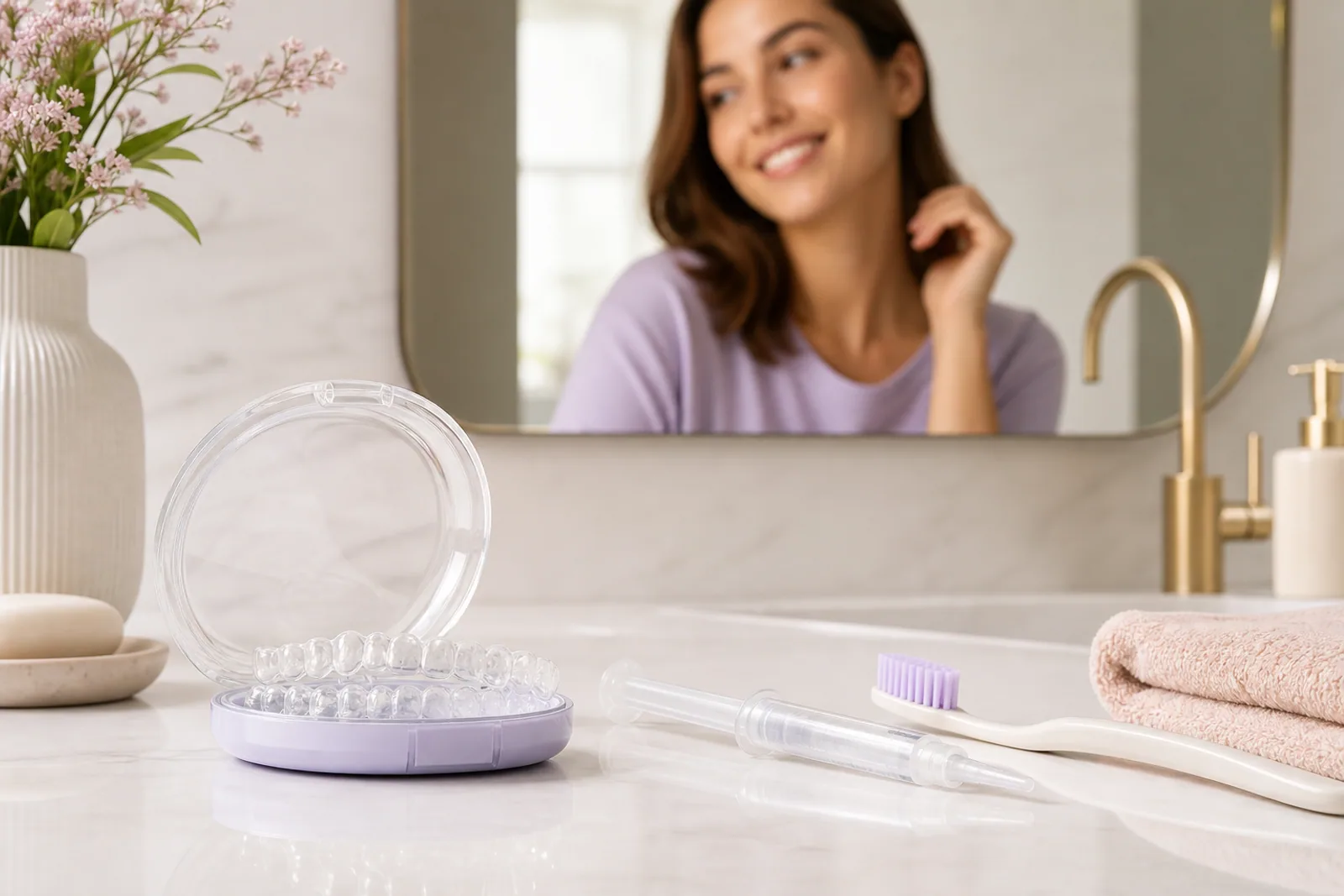
An orthodontic aligner is shaped to apply programmed force and fit around attachments. A whitening tray is intended to hold a controlled amount of product near tooth surfaces while limiting gum contact. Too much gel in a tight aligner can push product toward gums or into areas not intended for whitening.
Do not assume a promotional kit can be used at any stage. Ask for the product name, active ingredient, concentration, amount, frequency, and whether attachments affect the expected result.
When whitening may fit into treatment
Some clinicians allow whitening during active aligner wear; others prefer a later stage or after attachments are removed. Timing depends on sensitivity, cavities, gum condition, recent dental work, and the product.
If teeth are already sore after a tray change, adding a sensitivity-producing product may make symptoms harder to interpret. Separate changes: confirm the new aligner is comfortable, then follow the approved whitening schedule.
Will attachments cause uneven whitening?
Composite attachments do not respond to whitening like natural enamel. Enamel around them may lighten while the covered area changes differently. After removal, color can look uneven temporarily and may need reassessment.
Crowns, veneers, bridges, and tooth-colored fillings also do not whiten like enamel. A dental professional can set expectations and help decide timing.
How to reduce sensitivity and gum irritation
Use only the recommended quantity and contact time. More gel or longer wear does not create a safely faster result. Stop and seek advice for burning gums, white patches on soft tissue, sharp tooth pain, or sensitivity that persists.
A clinician may recommend pausing, shortening contact, changing frequency, or using a sensitivity-focused toothpaste. Never place household bleaching products or undiluted peroxide in trays.
Whitening does not replace stain prevention
Remove aligners before coffee, tea, wine, colored drinks, food, or tobacco. Rinse and clean teeth before reinserting when practical. Trapping pigment, sugar, or acid against teeth can discolor trays and increase oral-health risk.
Clean trays with the method in the aligner cleaning guide. Hot water, abrasive toothpaste, and harsh chemicals can scratch or distort plastic.
A safe whitening checklist
Confirm that cavities and gum inflammation are controlled. Identify restorations and attachments. Use a named product with written instructions. Know the correct dose and wear time. Stop for significant irritation. Keep routine dental examinations.
If whitening is included with a plan, the inclusion does not replace individualized approval. Contact the care team with your current tray stage, sensitivity history, and restoration details before starting.
Practical planning checklist
Whitening should begin with a dental examination because stains are not all alike. Decay, leaking restorations, gum recession and cracks can cause sensitivity or uneven results. Crowns, veneers, fillings and attachments do not whiten like natural enamel, so their color and position affect the cosmetic plan.
Do not assume an orthodontic tray is a whitening tray. Product concentration, reservoir space, gum coverage and prescribed contact time differ. Excess gel can leak onto soft tissue, while an unsuitable product may damage the tray. Use only a system and schedule approved for the exact appliance.
Timing can improve uniformity. Whitening before attachments may leave bonded areas different; whitening during treatment may produce uneven exposure; whitening after attachment removal lets the entire visible surface be assessed. The best sequence depends on treatment length, existing restorations and sensitivity history.
Stop and contact the dental team for significant gum burning, persistent sharp sensitivity, spontaneous pain or a dark tooth that changes differently from its neighbors. More gel or longer wear is not the answer to every color concern. Professional review protects enamel and helps set realistic expectations.
Set a sensitivity and shade baseline
Before whitening, record existing sensitivity, recession, cracks, restorations and the starting shade in consistent light. This makes it easier to judge whether the product is working evenly and whether a symptom is new. Discuss recent dental work and any tooth that is darker than its neighbors, since internal discoloration may require a different diagnosis and treatment.
Use the exact amount and contact time prescribed, wipe away excess gel and stop if the gums blanch or burn. More product does not create a proportional benefit. At the follow-up, assess shade after it stabilizes rather than immediately after dehydration. If restorations no longer match, plan replacement only after whitening and orthodontic positions are sufficiently stable.
Maintenance matters more than frequent retreatment. Coffee, tea, tobacco and highly pigmented foods can restain enamel, while acidic habits can increase sensitivity and erosion risk. Follow ordinary oral-hygiene guidance and wait for professional advice before repeating a course. Keep whitening gel away from children and store it exactly as labeled; heat or expired product can affect performance. The objective is a controlled, natural-looking improvement that remains compatible with healthy gums, stable restorations and the prescribed aligner schedule.
Frequently asked questions
Can I put whitening gel directly into aligners?
Only if the dental team and product instructions specifically allow it.
Will whitening damage clear aligners?
Some products or concentrations may affect tray surfaces; use only an approved product and schedule.
Can I whiten teeth with attachments?
It may be possible, but color can develop unevenly because composite does not whiten like enamel.
Should I whiten sensitive teeth?
Discuss the cause and severity first; active decay, recession, cracks, or another problem may need attention.
Sources and review notes
This article was prepared by the Hello My Teeth Editorial Team from authoritative dental guidance and peer-reviewed research. It provides general education, not an individualized diagnosis or treatment plan.
- American Dental Association: Home Oral Care
- CDC: Oral Health Tips for Adults
- PubMed: Intraoral Aging of Clear Aligner Materials—Systematic Review
- American Association of Orthodontists: Clear Aligners
Ready for a professionally reviewed plan?
Complete the candidacy check and provide the requested records so a licensed professional can determine whether a Hello My Teeth plan fits your case.