Underbite.
Understand your options.
An underbite can reflect tooth position, jaw relationships or both. The distinction is essential when considering aligners.
Explore my candidacy →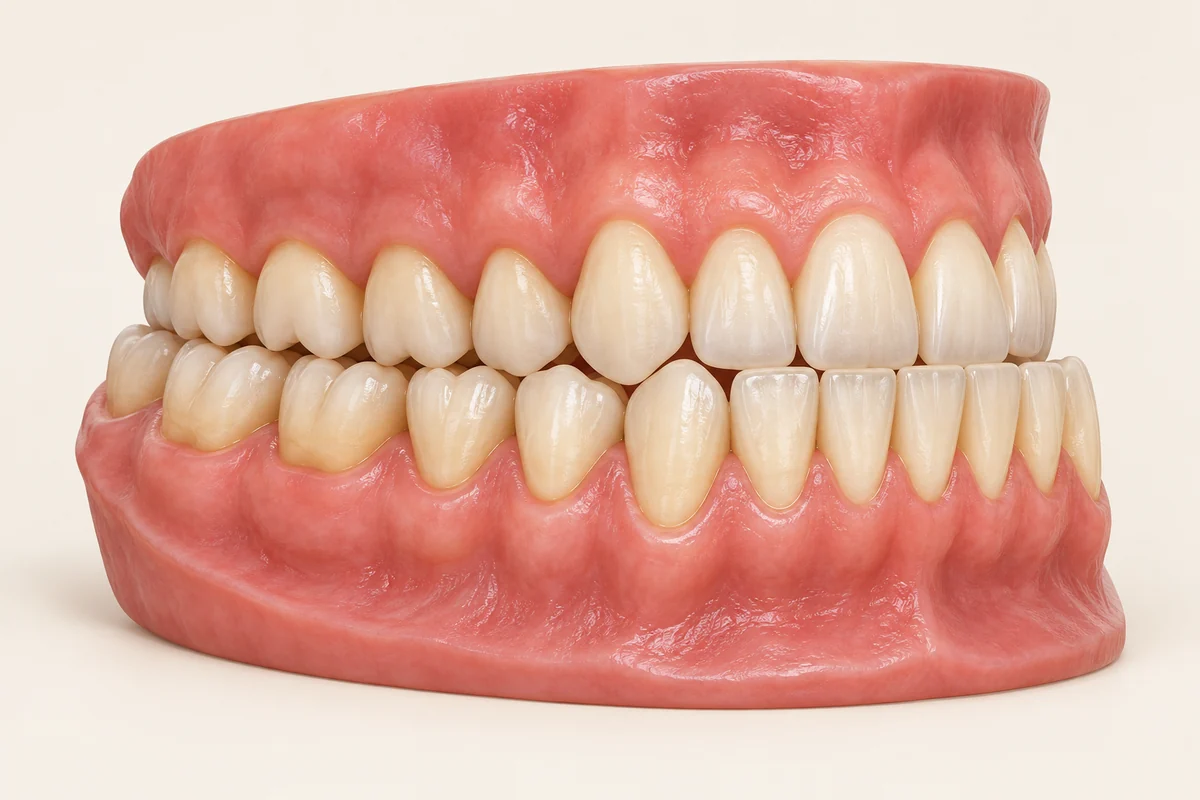
Understanding underbite
In an underbite, the lower front teeth sit in front of the upper front teeth when the bite is closed. This differs from a single upper tooth in crossbite. The appearance can range from a limited dental discrepancy to a broader skeletal relationship.
Your assessment should consider how the back teeth fit together, whether the jaw shifts when closing and whether growth is still occurring. A scan or photograph alone should not be used to promise a particular correction.
When aligners may help
Selected dental underbites may be managed with clinician-supervised aligner treatment. Treatment may involve both arches and additional procedures or appliances. A specialist should explain whether the proposed tooth movements address the problem or only provide a limited dental compensation.
Where treatment has limits
A significant skeletal underbite may need a comprehensive orthodontic assessment and, in some adults, discussion of jaw surgery. This is a reason for a specialist opinion, not a reason to assume that all underbites can or cannot use aligners.
Plan for your whole smile
Before recommending movement, a dental professional needs to assess your teeth, gums, bite and relevant dental history. Records may include photographs, scans or impressions and X-rays when clinically indicated. Any active decay or gum disease needs appropriate care first.
Aligners used in comprehensive orthodontics may involve attachments, elastics, space-management procedures or regular office visits. These options are not necessarily part of a remote aligner service. Hello My Teeth eligibility must be confirmed individually; inclusion in this guide does not mean every case is accepted.
Ask your clinician
- Is the reverse bite caused by teeth, jaws or both?
- Is there a shift when I close into my normal bite?
- What are the limits of correction without other treatment?
Time, cost and follow-up
Ask for a written estimate based on your diagnosis, including the wear schedule, monitoring, possible refinements and retainers. The condition name alone cannot predict treatment time or price. See current plans and pricing and confirm what your recommended plan includes.
Underbite and clear aligners
Can clear aligners correct an underbite?
They may be part of treatment in selected cases. Whether they are appropriate depends on the diagnosis, required movements and level of supervision.
Does an underbite always mean surgery?
No. The options depend on severity, age, jaw relationships and goals. Only an individual assessment can establish whether surgical treatment should be discussed.
Is an underbite the same as anterior crossbite?
The terms can overlap, but anterior crossbite can affect only one or a few upper front teeth. An underbite commonly describes a broader reverse front-tooth relationship.
Further reading: AAO: Crossbite and anterior bite relationships. Educational information; updated September 30, 2026.
Related alignment concerns
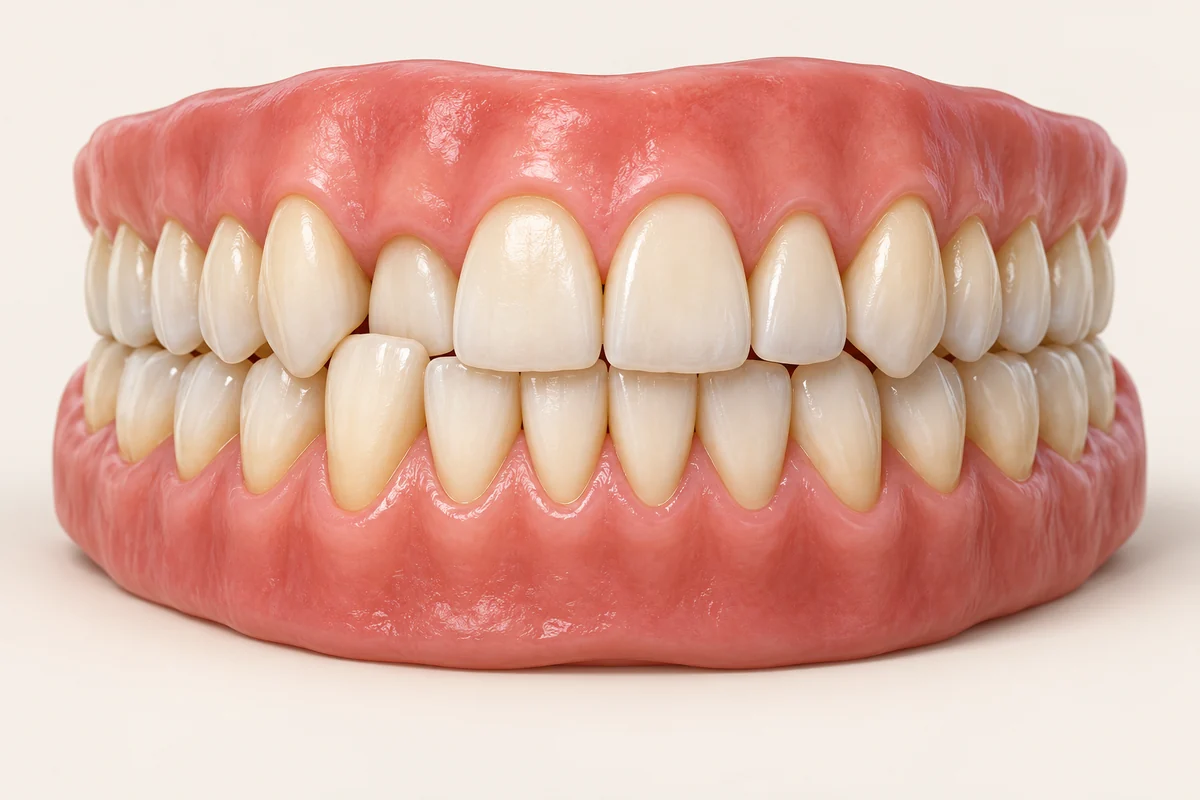
Crossbite
Upper and lower teeth meet in an altered inside–outside relationship.
Explore this case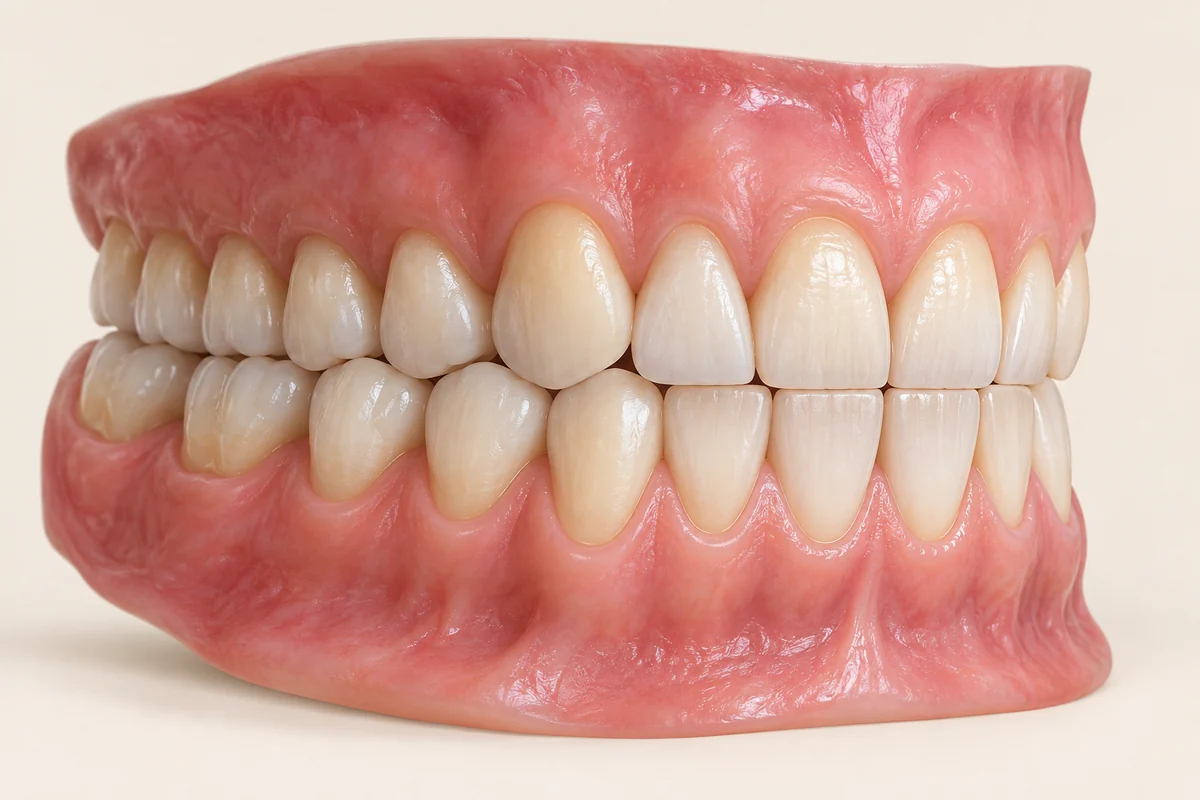
Edge-to-edge bite
Upper and lower front teeth meet at their cutting edges.
Explore this case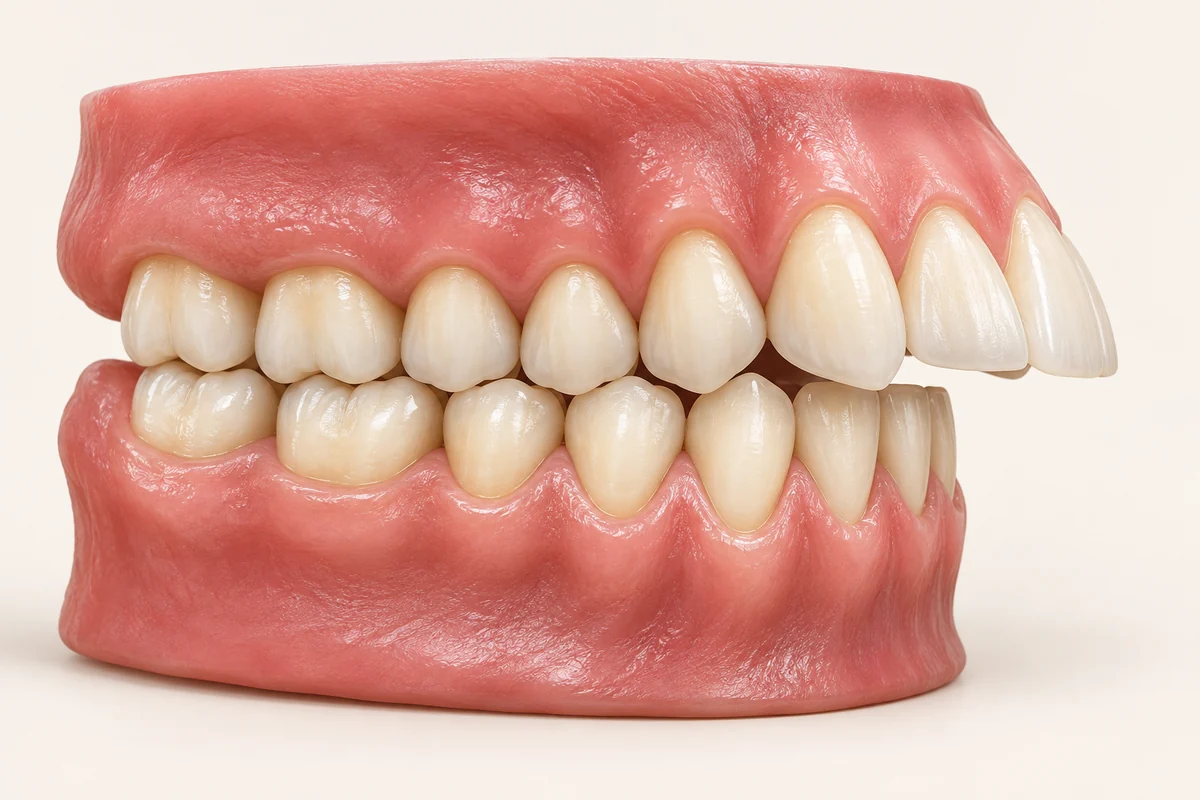
Overjet and protruding front teeth
Upper front teeth positioned too far ahead horizontally.
Explore this caseA plan starts with
understanding your smile.
An online questionnaire is a starting point. A dental professional must confirm your oral health, diagnosis and treatment suitability.
Check my candidacy Read the clear aligners guide